The Secondary Software Market: The Digital Sovereignty Lever France Underutilizes
The Secondary Software Market: The Digital Sovereignty Lever France Underutilizes
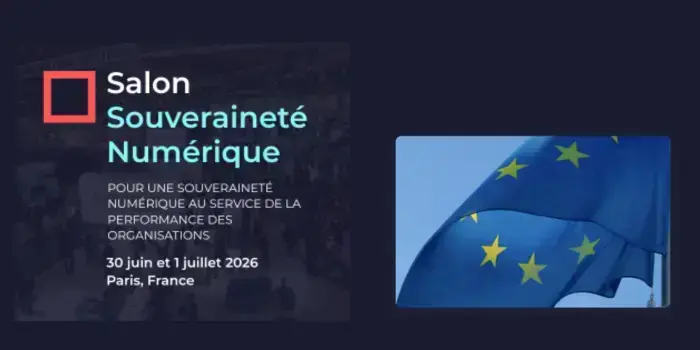
The Digital Sovereignty Salon 2026 brings together nearly 100 exhibitors, 20 conferences, and 30 workshops in Paris on June 30 and July 1, under the sponsorship of Anne Le Hénanff, Minister Delegate for Artificial Intelligence and Digital Affairs. The event takes place in a well-known context: 80% of European cloud spending benefits American players according to Cigref, and 70% of French data is hosted outside the European Union according to the Institut Montaigne. Public debate focuses on sovereign cloud, open source, and European regulations such as the AI Act or the Cyber Resilience Act. A lever curiously remains absent from the conversation: the secondary software license market. This article explains why it is one of the most operational sovereignty tools available today and why France does not use it to its full potential.
The Structural Finding: Sovereignty Does Not Finance Itself
Every European CIO who has tried to implement a digital sovereignty strategy between 2022 and 2026 knows the central difficulty. Sovereignty is not a technical choice. It is a financial choice that forces you to pay twice.
You pay once for existing contracts with non-European suppliers, which remain in place during the transition. You pay a second time for sovereign solutions deployed in parallel. This double cost, spread over the time required for migration, exceeds the investment capacity of the majority of public and private European CIOs. Until this financing is addressed, the sovereignty narrative remains largely a political goal without an operational vehicle.
The Digital Sovereignty Salon formulates it in its own way: "For a European digital sovereignty serving organizational performance." The slogan aims to avoid the double trap of the sovereignty discourse that guilts without helping, and the performance discourse that ignores the geopolitical issue. But the practical articulation between sovereignty and budgetary performance remains to be constructed in most organizations.
This is precisely the function that the secondary software market occupies, or could occupy.
What the Secondary Market Concretely Changes
The secondary software market is a simple mechanism. An organization resells perpetual licenses it no longer uses. Another organization buys these licenses at a price lower than new. The transaction is done through a specialized intermediary who secures the chain of ownership, validates the uninstallation at the seller, and transfers the license to the buyer with an enforceable contract.
This mechanism produces three effects that sovereignty policies seek elsewhere.
The first effect is financial. Discounts on the secondary market range from 20% to 70% of the new price depending on the publisher, version, and volume. For a medium-sized CIO, the annual savings regularly represent six to seven figures. This saving is not a marginal gain: it is cash that can be reallocated to migration to European solutions, NIS2 compliance, investment in sovereign cloud, or securing critical infrastructures.
The second effect is reversibility. The secondary market works both ways. An organization migrating to a sovereign alternative can resell the non-European licenses it abandons, rather than letting them decay in its inventory. This resale accelerates migration by financing part of the shift.
The third effect is structural. The value of a license on the secondary market creates a price reference independent of the publisher. This reference changes the negotiation during renewals. When a CIO knows it can sell 40% of its inventory at a known price, or buy second-hand critical volumes during a transition, it no longer negotiates on its knees.
The Often Underestimated European Legal Framework
The legal argument against the secondary market is weak and will remain so. The Court of Justice of the European Union settled the matter in its UsedSoft ruling of July 3, 2012, stating that publishers cannot oppose the resale of perpetual software licenses within the European Economic Area, provided operational conditions are met: effective uninstallation at the seller, full transfer of the license, traceability of the chain of ownership.
Subsequent case law, German, Dutch, and French, has consolidated this principle and specified the modalities. Publishers have long tried to make resale impractical through contractual clauses or technical constraints. Several of these attempts have been invalidated by the courts. Therefore, the secondary market rests on a solid legal foundation, specifically European, and has survived more than a decade of contestation.
This point deserves emphasis in a discussion on sovereignty. European law has explicitly protected a mechanism that allows European organizations to extract more value from the software capital they have already acquired. This is precisely the type of lever digital sovereignty seeks to activate.
Why France Underutilizes This Lever
If the financial argument is strong and the legal framework clear, why does the secondary market not hold a visible place in the French debate on digital sovereignty? Three reasons combine.
The first is cultural. The term "second-hand" remains associated with a low-end replacement logic, whereas the secondary software market does not concern degraded products but licenses identical to those sold by the publisher. This semantic confusion affects the image, especially in public organizations where second-hand purchases raise procedural questions.
The second is procedural. Procurement services, both public and private, have referencing cycles that favor traditional distributors and direct publishers. Onboarding an additional channel requires administrative effort that few directions prioritize, except in cases of severe budget pressure.
The third is the communication asymmetry between publishers and secondary market players. Publishers have marketing budgets and public relations that far exceed those of marketplaces. The dominant narrative on software for the past ten years is that of subscription and SaaS, not that of the residual value of perpetual licenses.
The result is that in 2026, France mobilizes a marginal fraction of the European potential of the secondary software market. German buyers use it more. Dutch buyers have integrated it as a standard channel. French buyers, with a few exceptions, have not yet made it a structural lever.
The Secondary Market and the Sovereign Agenda: An Unwritten Alliance
The absence of the secondary market in the sovereignty debate is paradoxical because the two subjects reinforce each other. An organization that sells its partly obsolete non-European licenses finances its migration to European solutions. An organization that buys second-hand critical bricks during the transition gains time without further subsidizing dominant position publishers. An ecosystem where the secondary market operates effectively is one where the balance of power between publishers and European users is less skewed.
All actors present at the Digital Sovereignty Salon 2026, from Sopra Steria to Linagora through Cloud Temple, Free Pro, or Wire, defend a facet of sovereignty. None by design covers the financial lever of the secondary market. This space is open, and it is complementary to the sovereign solutions that occupy the forefront.
Concrete Trajectories for 2026
For a CIO or procurement direction that wants to integrate this lever into their sovereignty strategy, three trajectories are practicable this year.
The first is a selective resale trajectory. Identify in the existing inventory the perpetual licenses that are no longer used, or will be less used in the next 24 months due to migration or organizational change. Resell these licenses through a recognized European marketplace. Reallocate the proceeds to a specific sovereignty project: NIS2 compliance, cloud migration, financing an open-source alternative.
The second is a tactical purchase trajectory. Rather than signing a new contract with a dominant position publisher, buy second-hand the necessary volumes to maintain critical operation during the migration. This allows deferring a costly renewal and financing the sovereign alternative in parallel.
The third is a structural referencing trajectory. Integrate the secondary market into the IT procurement policy as a standard channel, on par with traditional distributors and direct purchases from the publisher. Include in public procurement and internal policies the possibility of supplying all or part of a lot through the secondary market, with corresponding contractual requirements. This change, requiring coordination between CIO, procurement, and legal, sustainably transforms the organization's negotiation capacity.
Conclusion: Sovereignty Begins with Control Over One's Own Stock
The French debate on digital sovereignty focuses on what to buy, where to host, which cloud to adopt. These questions are legitimate. But they leave a preliminary question in the blind spot: what to do with what we already own.
The secondary software market provides an answer to this preliminary question. It transforms a perpetual license inventory, treated today as a fixed cost, into a liquid asset that can finance the sovereign trajectory. It operates within a European legal framework that protects the buyer and the seller. It allows reinjecting value into the local economy instead of indefinitely transferring it to the balance sheets of non-European publishers.
The Digital Sovereignty Salon 2026 is an opportunity to put this lever on the table. We will be exhibitors there to defend this perspective and discuss concrete trade-offs with CIOs, CISOs, and buyers who want to transform sovereignty into an operational discipline rather than an intention.
Cédric François, Softcorner. April 2026.
Sources
Digital Sovereignty Salon 2026, official program, Paris, June 30 - July 1, 2026.
Court of Justice of the European Union, UsedSoft GmbH v. Oracle International Corp., case C-128/11, July 3, 2012.
Cigref, data on the American share of European cloud spending.
Institut Montaigne, data on extra-European hosting of French data.
Cigref, The Secondary Software Market, positioning document.
Autres Events
See all
Digital sovereignty of local authorities: three concrete budgetary levers for public CIOs in 2026
NIS2, dependence on GAFAM, constrained IT budgets: how can the CIOs of local authorities finance their digital sovereignty trajectory without budget extensions in 2026. Analysis on the occasion of the Coter Numérique.
See more
Software Asset Management in 2026: Why the Secondary License Market Now Belongs in Your SAM Strategy
Cloud licensing inflation, post-Broadcom turbulence, AI workloads, and the UsedSoft ruling: why the secondary software market is now a structural pillar of SAM strategy. Analysis ahead of SAMS Nordic 2026 in Copenhagen.
See more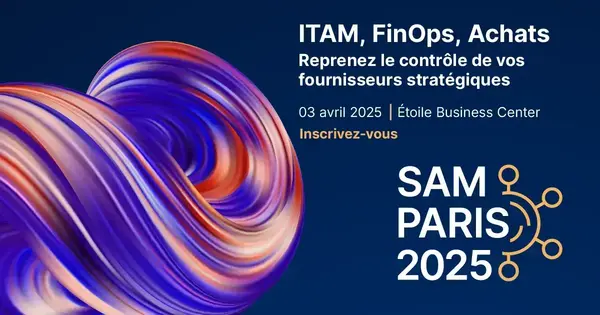
Softcorner at SAM Paris 2025: Reduce Your Software Costs and Secure Your Compliance
On April 3, 2025, Softcorner will be a Gold Sponsor at SAM Paris 2025, the must-attend event dedicated to Software Asset Management (SAM). Come and discover how to optimize your software investments, reduce your costs, and ensure your compliance with IT audits. Our team will welcome you at our booth and host an exclusive workshop to help you regain control of your IT budget.
See more